
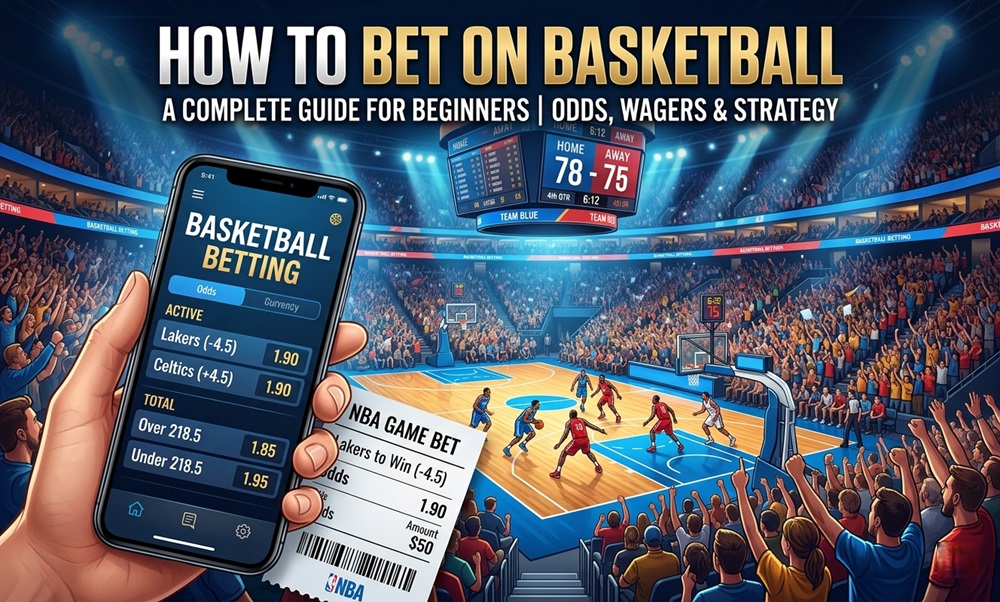
If you’ve ever watched an NBA game with friends who were talking about “the spread” or “the over” and had no idea what they meant, this guide is for you. Betting on basketball isn’t complicated once you understand a few core concepts — and getting them right from the start saves a lot of money down the line.
The Three Most Common Basketball Bets
1. The Point Spread
This is the most popular basketball bet. The sportsbook sets a margin — say, the Lakers are -6.5 against the Celtics. That means:
- If you bet the Lakers, they need to win by 7 or more for your bet to win
- If you bet the Celtics, they can lose by 6 or fewer (or win outright) and your bet wins
The spread levels the betting field between uneven matchups.
2. The Moneyline
Here you’re just picking who wins — no spread involved. But the odds adjust for the favorite/underdog difference.
Example: Lakers -200 vs. Celtics +170
- Bet $200 on the Lakers to win $100 (they’re the favorite)
- Bet $100 on the Celtics to win $170 (they’re the underdog)
3. The Total (Over/Under)
The sportsbook sets a combined scoring number — say 224.5 points. You bet whether both teams will score more (over) or fewer (under) than that number combined. This bet has nothing to do with who wins.
Quick Comparison Table
| Bet Type | What You’re Predicting | Payout Style |
|---|---|---|
| Point Spread | Win margin | Near even (usually -110) |
| Moneyline | Who wins outright | Varies by odds |
| Over/Under | Combined score | Near even (usually -110) |
Key Terms Every Basketball Bettor Should Know
- -110 odds: The standard “juice” on spread and total bets — you bet $110 to win $100
- Juice / Vig: The sportsbook’s cut built into the odds
- Line movement: When odds shift due to betting volume or new information (injury news, etc.)
- Push: When the final score lands exactly on the spread or total — your bet is refunded
Common Mistakes to Avoid
- Betting on your favorite team emotionally. Bias kills objectivity, and objectivity is what wins long-term.
- Ignoring injury reports. A star player sitting out changes spreads significantly. Always check injury news before betting.
- Chasing losses. Losing three bets and doubling your fourth to “get it back” is how bankrolls disappear fast.
- Not shopping lines. Different sportsbooks often have slightly different spreads. Getting -5.5 instead of -6.5 matters a lot at the end of a game.
Pro Tips for New Basketball Bettors
Tip 1: Start with totals (over/under). They’re often easier to analyze than spreads because you’re looking at pace of play, defensive matchups, and fatigue — not just who wins.
Tip 2: Pay attention to back-to-back games. Teams playing on consecutive nights, especially with travel, tend to underperform. This often isn’t fully priced into the spread.
Tip 3: Track your bets in a simple spreadsheet. After 50+ bets, patterns emerge — which bet types you perform best on, which teams you misjudge consistently.
FAQs
Q: What does -110 mean in basketball betting? It means you wager $110 to profit $100. It’s the standard vig (sportsbook fee) on most spread and total bets.
Q: Can you bet on basketball games live? Yes. Most major sportsbooks offer live in-game betting with constantly updating odds. It’s fast-paced but offers unique opportunities if you’re watching the game.
Q: What’s the easiest basketball bet for beginners? Many beginners start with the over/under on total points, since it doesn’t require picking a winner — just understanding how teams score.
Q: Is there a strategy for NBA betting? Yes. Focusing on line value, tracking injury reports, and specializing in specific teams or conferences helps build an edge over casual bettors.
Conclusion
Learning how to bet on basketball is a process — don’t expect to be profitable overnight. Understand the three main bet types first, keep your bets small while you’re learning, and focus on games you actually follow. Knowledge of the game is your real edge. The bettors who do well long-term treat it like a discipline, not a lottery.


